
We buy kids’ smartwatches to make our children safer. Yet in doing so, we create one of the most detailed records of a child’s life that has ever existed: where they go every day, who they talk to, what their voice sounds like, and sometimes even their heart rate and body temperature.
None of this is a reason to avoid smartwatches. Used well, they genuinely improve safety and independence. But it is a reason to look beyond features and price, and ask a harder question: who else can see this data, and how is it protected?
This guide walks through what a children’s wearable typically collects, what Indian law now expects, the warning signs of a poorly secured device, and a practical checklist you can use before and after buying.
What a kids’ smartwatch actually collects
Different models collect different things, but a modern 4G kids’ watch may handle all of the following:
- Location data: live position and, on many models, a history of where the child has been.
- Contacts and call logs: who the child can call, who calls them, and when.
- Voice and video: voice messages, call audio and video streams.
- Photos: pictures taken with the watch camera.
- Health and activity data: steps, exercise, and on some models heart rate, temperature or blood oxygen.
- Device and account data: SIM details, the parent’s phone number and email, and app usage.
Taken together, this is a highly sensitive profile. A location history alone can reveal a child’s school, tuition centre, home address and daily routine.
Why children’s data deserves extra caution
Adults can, at least in theory, read privacy policies and make informed choices. Children cannot. They also cannot easily change a compromised address, school or routine. That is why regulators around the world treat children’s data as a special category, and why parents should hold children’s devices to a higher bar than their own gadgets.
Read More: The CPA’s Role in Strengthening Audit Committees and Boards
There is also a reputational history here. Over the past decade, security researchers in several countries have found cheap, unbranded kids’ watches that sent data without encryption, used default passwords or allowed strangers to listen in. Some European regulators went as far as warning parents against specific products. The lesson is not that all kids’ watches are risky. It is that brand, build quality and software practices matter enormously.
What Indian law now says about children’s data
India’s Digital Personal Data Protection Act, 2023 (DPDP Act) gives children’s personal data specific protection. In broad terms, it treats anyone under 18 as a child, requires organisations to obtain verifiable consent from a parent or lawful guardian before processing a child’s personal data, and restricts tracking, behavioural monitoring and targeted advertising directed at children. The DPDP Rules, notified in 2025, set out how verifiable parental consent should work and list limited exemptions, for example where tracking is genuinely in the interest of a child’s safety.
For parents, the practical takeaway is simple. A reputable kids’ wearable company should be asking for your consent as the parent, explaining what it collects and why, and not using your child’s data to profile them or sell advertising. If a product’s app or privacy policy is silent on these points, treat that silence as information.
(This is a general overview, not legal advice. The law and its implementation timelines continue to evolve.)
Six signs of a well-secured kids’ smartwatch
- Encrypted data in transit. Data moving between the watch, the company’s servers and the parent app should be encrypted. Good brands state this plainly and often reference recognised frameworks such as the EU’s GDPR.
- Parent-controlled contacts. Only contacts approved by the parent should be able to call or message the watch, with unknown numbers blocked.
- No open internet or social media. A closed system dramatically reduces the ways a child can be contacted or exposed to harmful content.
- A clear, readable privacy policy. You should be able to find out what is collected, where it is stored, how long it is kept and how to delete it.
- Regular firmware updates. Security is not a one-time feature. Watches that update over Wi-Fi can be patched when issues are found.
- A free, official parent app. Be wary of watches that rely on generic third-party apps, or that push paid subscriptions to unlock basic safety controls.
Red flags to avoid
- Unbranded watches sold with a generic app downloaded from a link in the box.
- Apps that ask for unrelated phone permissions, such as access to all your contacts or files.
- No information on who operates the servers.
- Remote “listen in” features that can be activated without the child knowing, especially if the account is easily shared.
- Default passwords that cannot be changed.
Privacy is a family conversation too
Technology settles only half the question. The other half is how parents use the data. A few principles help:
Tell your child what the watch does. Explain that you can see where they are, and why. Children who understand the purpose are more likely to keep the watch on and less likely to feel spied on.
Check less, not more. Agree on check-in moments, such as arriving at school or leaving tuition, instead of opening the map every few minutes.
Limit who has admin access. Add both parents and perhaps one grandparent, but avoid sharing the parent account widely.
Delete what you do not need. If the app allows it, clear old photos and data periodically.
Revisit as they grow. What is appropriate for a seven-year-old is not appropriate for a thirteen-year-old. Loosen controls step by step.
A pre-purchase privacy checklist
- Is the brand established, with a local website, customer support and warranty?
- Does it state that data between watch, cloud and app is encrypted?
- Is there a clear privacy policy you can read before buying?
- Are contacts and calls controlled by the parent, with stranger-call blocking?
- Is there no open browser, app store or social media?
- Is the parent app free, official and available on the Play Store and App Store?
- Does the watch receive firmware updates?
After you buy: a ten-minute privacy setup
- Create the parent account with a strong, unique password.
- Add only essential contacts and enable stranger-call blocking.
- Review app permissions on your own phone and decline anything unnecessary.
- Turn on Class Mode for school hours.
- Connect the watch to home Wi-Fi so it can update automatically.
- Walk your child through what the watch shares and with whom.
Choosing with confidence
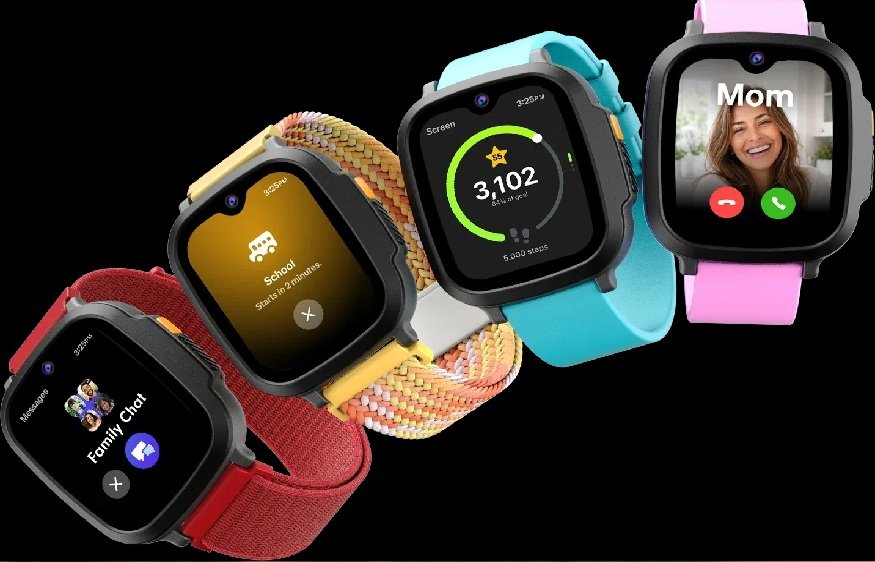
The best kids’ wearables are built by companies that treat privacy as part of the product rather than a page on the website. imoo is one example of a brand that is open about its approach: its watch phones use an encrypted data transfer mechanism between watch, cloud and parent app modelled on GDPR principles, have no open internet or social media, and come with a free parent app. Its Z3 is a well-rounded children’s smart watch that combines those privacy foundations with HD video calls, multi-system location tracking, a larger 1.5-inch display and 20-metre water resistance.
Read More: How Accounting Firms Help Businesses Stay Ahead Of Compliance
The bottom line
A smartwatch can make your child safer only if the data it creates is kept safe too. Look for encryption, parent-controlled contacts, a closed system and a transparent company behind the product. Then pair the technology with honest conversations at home. That combination, more than any single feature, is what protects children in a connected world.